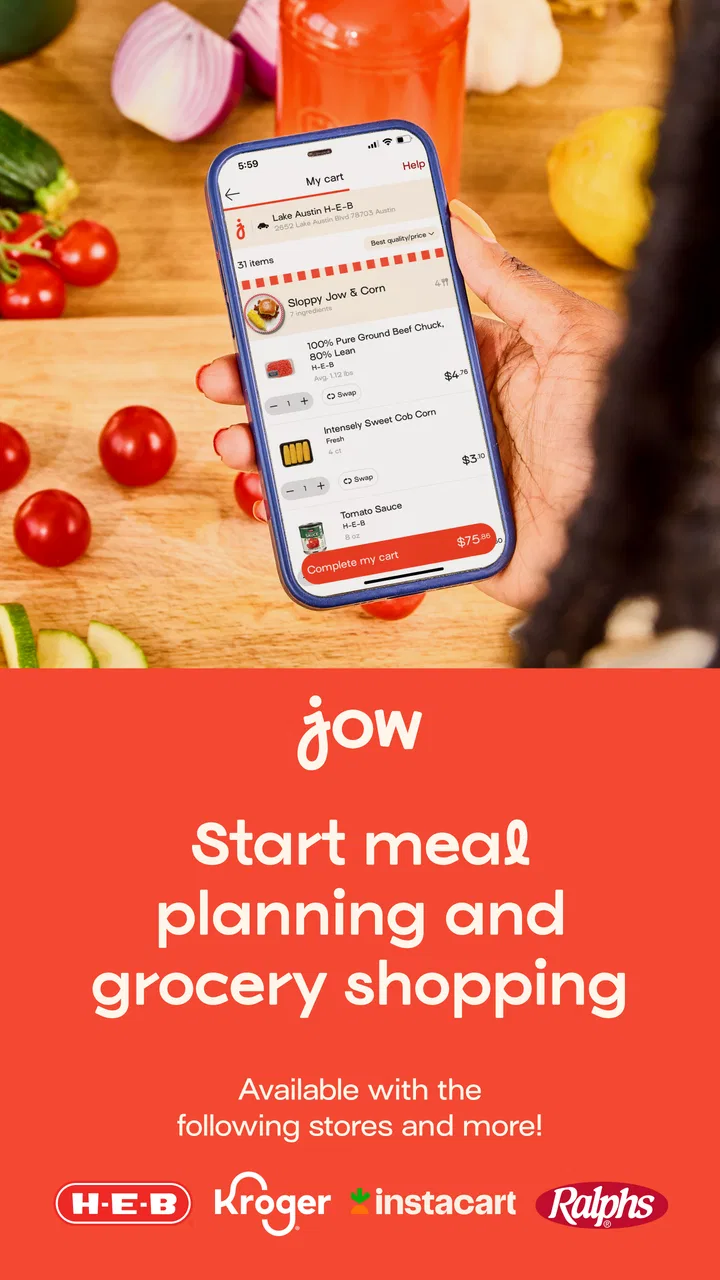
Jow - easy recipes & groceries
- 3.7
- Rating
- 5.00M
- Installs
- Free
- Price

 Analysis by App-foxy
I usually judge a meal-planning app by what happens after the first few days. It is easy to enjoy a neat recipe feed when I am motivated, but the real test is whether the app still helps on a tired Tuesday, when I have little time, a half-empty kitchen, and no desire to build a shopping list from scratch. That is where Jow, an app from Jow in the Food & Drink category, makes a convincing first impression.
Jow combines recipe recommendations with a shopping list that changes around the meals I choose. The idea is simple, but the practical benefit is bigger than it sounds: instead of picking a recipe and then manually translating it into a supermarket plan, I can use the suggested meals as the starting point for the whole shop. It is free to download, suitable for Everyone, and available on Android devices running at least version 7.0. There are in-app purchases ranging from $0.99 to $48.99 per item, so I would still check the purchase prompts before treating every part of the experience as cost-free.
What using Jow feels like beyond the first impression
I find the lasting test is not how quickly I can browse meal ideas, but whether the workflow still fits when my routine changes. This section looks at the small choices that make Jow useful over time, including how I can adapt a plan instead of treating it as fixed. From there, I turn to how clearly the app supports people using it in different circumstances.
You May Also Like

 Blood Strike: 2.5 Anniversary
Blood Strike’s Loadouts Turn Every Drop Into a Tactical Gamble
A close look at Blood Strike’s custom loadouts: how fast access to signature weapons reshapes its battle royale rhythm, rewards preparation, and narrows the gap between fights.

 Pandora - Music & Podcasts
Pandora’s Music Is Easy to Start, but Harder to Recover
Pandora’s strength is its low-effort path from a seed to a station. Its weak spot is how much confidence it asks you to place in connection, setup, and quiet recovery.

 8 Ball Pool
 Is Built on Rivalries, Rematches, and Routine
A close look at the rivalries, rematches, shared routines, and unanswered safety questions that turn a quick pool match into a persistent mobile community.

 Samsung Music
’s Quiet Strength Is Playing What You Already Own
Its reach comes less from spectacle than from dependable access to a personal library. That simplicity is both the app’s strongest retention engine and its ceiling.

 AccuWeather: Weather Radar
AccuWeather Review: A Quick, Clear Forecast for Everyday Decisions
For everyday plans, the best forecast is the one you can understand quickly. AccuWeather makes rain timing, radar, and local conditions easy to act on, with a few trade-offs.

 Hill Climb Racing
Why Hill Climb Racing Still Turns Crashes Into One More Run
A tiny car, a bumpy hill and one more upgrade: Hill Climb Racing keeps resurfacing because its simple chaos makes every near-miss feel personal.
More From Our News Desk



The first week is where the app earns attention
During my first week, the strongest part of the experience was the reduction in small decisions. Normally, meal planning has several separate jobs: finding recipes, checking whether I already have the ingredients, writing down what is missing, and remembering the list at the store. Jow brings those steps closer together. I can browse ideas, decide what sounds realistic, and let the shopping list reflect those choices.
That workflow suits people who do not need a strict nutrition program but still want more structure than “I will figure it out later.” I found it especially useful when I wanted a few dependable dinners without committing to a complete weekly schedule. Choosing only the meals I actually expected to cook made the list feel more relevant than a generic grocery checklist.
The recipe recommendations are also more useful when I treat them as prompts rather than instructions carved in stone. If a meal looks good but I know I will be cooking for fewer people, I use the recipe as a framework and inspect the list before shopping. This is an important habit because an automatically assembled list can be convenient without perfectly matching every household’s appetite, pantry, or preferred brands.
One practical tip is to review the list before leaving home, not while standing in the supermarket. I can remove ingredients I already own, notice duplicate items shared by different meals, and decide whether a planned recipe is still worth making. That short check prevents the app from becoming a source of unnecessary purchases. The best result comes from using its suggestions as a first draft and applying my own judgement before checkout.
A realistic evening with the shopping list
Imagine coming home after work with enough energy to cook, but not enough patience to search through recipe websites. I can open Jow, choose a meal that fits the evening, and use the resulting list to see what needs to be bought. If I am shopping on the way home, that is more useful than saving a recipe somewhere and hoping I remember its ingredients later.
The same workflow helps when I am planning several meals around overlapping ingredients. I might choose one dish that uses vegetables early in the week and another that uses the remaining staples later. The dynamic list makes it easier to see the combined shopping need instead of treating each recipe as an isolated project. This does not eliminate food waste by itself, but it gives me a clearer chance to avoid buying ingredients for meals I will never reach.
For a couple or a small household, the app can also make an informal division of labor easier. One person can select the meals while another handles the shop, because the list provides a shared reference point. I would not rely on it as a substitute for discussing allergies, dislikes, or what is already in the cupboards, but it can reduce the “what are we eating?” conversation that repeats every evening.
Why the novelty can last into the first month
The month-to-month value comes from repetition without having to start from a blank page. Every time I need ideas, I have a focused place to begin. That matters more than an impressive first session because the recurring problem is not discovering one good recipe; it is continuing to make reasonable choices when routines become busy.
Jow is most helpful for people who are stuck between two extremes. On one side is spontaneous takeaway, which solves tonight but often leaves tomorrow undecided. On the other is detailed meal preparation, which can demand more planning than many people want. The app occupies the middle ground: enough structure to guide a shop, but not so much that I have to organize every hour of the week.
I also like the possibility of using it in cycles rather than every day. I can plan a few meals through the app, take a break when I have leftovers or existing plans, and return when the kitchen needs direction. That makes it less demanding than a system that expects constant logging. A useful long-term routine is to choose meals based on the week ahead, not on an ideal version of myself who will suddenly cook elaborate dishes every night.
Another non-obvious strength is that the shopping list changes the way I evaluate recipes. Instead of asking only, “Does this look tasty?” I start asking, “Will I actually buy these ingredients, and can I use them elsewhere?” That small shift makes the app more practical. It turns recipe browsing into a planning decision, which is closer to the real work of feeding myself consistently.
The maintenance burden is low, but not invisible
Jow reduces planning effort, but it does not remove the need for maintenance. I still need to check what is in the refrigerator, adjust for household preferences, and remove items that are already available. If I skip that step, the dynamic list can become less trustworthy. The app saves time only when I keep the information around the meal choices accurate enough for my situation.
My advice is to establish a quick routine before finalizing a shop: scan the pantry, check fresh ingredients, look for overlapping items, and then edit the list. This takes much less effort than writing every ingredient manually, while avoiding the common mistake of buying a second version of something already at home. It is also worth checking whether a selected recipe fits the time and equipment I have that day. A good list cannot make an inconvenient meal convenient.
This maintenance requirement may disappoint anyone expecting a completely automatic grocery manager. Jow recommends meals and organizes what I need, but I remain responsible for decisions that depend on context. Household size, substitutions, food preferences, and leftover plans are personal details. The app is a helpful planning assistant, not a mind reader.
The app’s free entry point makes it easy to try without a large commitment. Still, the presence of in-app purchases means I would pay attention to what is offered during use, particularly if I am trying to keep meal planning entirely within a fixed grocery budget. The app itself may help control impulse buying by giving me a plan, but the final cost of food depends on the recipes, quantities, and products I choose.
Where fatigue starts to appear
The biggest long-term risk is recommendation fatigue. A stream of meal ideas feels fresh at first, but after several weeks I may begin to recognize the same general patterns or lose interest in browsing. That is not a reason to dismiss the app; it is a reason to use it with a clear purpose. I get more value when I select a small set of meals I genuinely intend to cook instead of scrolling endlessly for the perfect option.
There is also a difference between convenience and personalization. A recommendation can be appealing in isolation but unsuitable for my schedule, budget, cooking confidence, or household preferences. If I have strict dietary requirements, highly specific nutritional targets, or a family with many strong dislikes, I would want a more specialized tool or a manually controlled plan. Jow’s strength is reducing everyday friction, not replacing careful dietary management.
Another source of fatigue is the gap between planning and execution. Seeing a tidy list can create the feeling that the week is organized, but the meals still need preparation, cleanup, and sometimes substitutions. I found it important not to over-plan. Selecting too many recipes makes the list look productive while increasing the chance that ingredients sit unused. Choosing fewer meals and leaving room for leftovers is a better long-term strategy.
People who prefer complete control may also find the app restrictive in a subtle way. If I already know exactly what I want to cook, a dynamic recommendation system adds little. A simple notes app or a manually maintained grocery list may be faster for a fixed menu. Jow earns its place when I need ideas and coordination together, not when I have already solved the planning problem.
Who benefits most from the recurring workflow
I would recommend Jow to someone who regularly asks what to cook, shops without a plan, or saves recipes that never become meals. It is particularly suitable for busy adults, couples coordinating dinners, and people who want a gentle introduction to meal planning without building a complicated spreadsheet. The experience is approachable because the starting point is food, not administration.
It can also help a person who moves between cooking and convenience meals. I do not need to become a dedicated meal-prepper to benefit. Even a few planned dinners can make a week feel less chaotic. The key is to use the app as a flexible guide: select realistic recipes, inspect the list, and allow leftovers or spontaneous meals to exist alongside the plan.
I would be more cautious about recommending it to someone with medical dietary needs, a very tight and fixed food budget, or a household that requires exact ingredient control. In those situations, a specialized nutrition app, a carefully maintained personal list, or direct planning from trusted recipes may be safer and more precise. The same applies to users who dislike browsing suggestions and already have a reliable cooking routine.
How it compares with familiar alternatives
Compared with recipe websites, Jow feels more connected to the shopping stage. A website may offer a larger range of recipes or more detailed background, but I usually have to create the grocery list myself. Jow’s advantage is the bridge between deciding and buying. That convenience matters most when I want to move quickly from “this sounds good” to “these are the things I need.”
Compared with a basic notes app, it offers more direction but less total freedom. A notes list is excellent for recording exactly what I want, including household chores or unrelated errands. Jow is better when I want meal ideas to shape the list. I would use the notes app for a known menu and Jow for a week when I need help deciding.
Compared with full meal-prep platforms, Jow feels lighter. A more advanced service may suit people who want detailed schedules, strict nutritional tracking, or extensive customization. Jow is more appealing when the goal is simply to cook more often and shop with less mental effort. Its recurring value depends on that simplicity remaining useful rather than feeling too shallow.
Everyday details that decide whether it stays installed
The app’s audience is substantial, with over five million installs and an average rating of 3.7 from around eighteen thousand ratings. I read that as evidence of broad interest rather than a guarantee that every household will love the workflow. The rating suggests a product people can find useful while still encountering limitations, which matches my experience: the core idea is practical, but the quality of each week depends on how carefully I adapt it.
Jow was released on April 30, 2018, and the current Android version is 22.0.0 (5). That gives the app a mature feel rather than the uncertainty of a brand-new experiment. I would still keep the operating-system requirement in mind before installing it on an older device. The age rating is Everyone, which fits the straightforward food-planning purpose.
One useful habit is to treat the list as a checkpoint rather than a command. Before shopping, I ask three questions: do I already have this, will I use the whole package, and does this meal still fit the week? This turns a convenient feature into a way of controlling waste and overspending. It is a small but important distinction between using the app actively and simply accepting every suggestion.
I also recommend planning around energy, not only ingredients. Put the easiest meal on the busiest evening and reserve a more involved recipe for a day when cooking sounds enjoyable. Because the app encourages meal selection before shopping, it gives me a natural place to make that decision. This is one of the ways its value grows over time: it can support a routine that reflects real life instead of an imaginary schedule.
My long-term verdict
After the novelty fades, Jow still earns space on my phone if I use it as a flexible weekly prompt rather than a complete lifestyle system. Its lasting strength is the connection between recipe discovery and grocery preparation. That link removes a frustrating amount of small planning work, especially when I am willing to review and edit the resulting list.
I would not keep it installed for strict nutrition control, exhaustive recipe research, or perfectly automated shopping. Those needs call for different tools. I would also avoid selecting more meals than I can realistically cook, because over-planning is the quickest way to turn a helpful app into another source of guilt.
For ordinary weeknight cooking, though, the free starting point and practical shopping workflow make it worth trying. My recommendation is to give it a fair test across several real shopping trips, not just one browsing session. Choose a modest number of meals, check the list against the kitchen, and see whether the app genuinely reduces decisions. If it does, the lasting value is not the recipe feed itself, but the repeatable habit of turning meal ideas into a workable shop.
FAQs for Jow - easy recipes & groceries
01What is Jow and how does it work?
Jow is a convenient app designed to simplify meal planning and grocery shopping. It offers personalized recipe suggestions based on your preferences and dietary needs. Once you've selected your meals, Jow generates a shopping list and even allows you to order groceries directly from the app, making meal prep easier than ever.
02Does Jow accommodate dietary restrictions or preferences?
Yes, Jow accommodates various dietary restrictions and preferences. During setup, you can specify your dietary needs, such as vegetarian, vegan, gluten-free, or any allergies. The app then tailors recipe suggestions to match these preferences, ensuring you receive meal ideas that are both suitable and delicious.
03Can I customize the serving sizes in recipes on Jow?
Absolutely! Jow allows you to adjust serving sizes to fit your household's needs. Whether you're cooking for one or a family of six, the app recalculates ingredient quantities accordingly, ensuring you have the right amount for each meal without the hassle of manual adjustments.
04How does Jow handle grocery delivery?
Jow partners with local grocery stores to offer seamless delivery options. After selecting your recipes, Jow generates a shopping list that can be ordered directly through the app. You can choose a delivery time that suits you, making it convenient to receive fresh ingredients right at your doorstep.
05Is Jow available in multiple languages and regions?
Currently, Jow is primarily available in English and serves several regions where partnered grocery stores operate. However, the app is expanding, and support for additional languages and regions is planned. It's best to check the app's availability in your area through the app store or Jow's website.
Pros
- User-friendly interface enhances navigation.
- Personalized meal plans fit dietary needs.
- Integration with grocery delivery services.
- Time-saving recipe suggestions.
- Budget-friendly shopping lists.
Cons
- Limited international recipe options.
- Requires internet connection for full features.
- Occasional app crashes reported by users.
- Some features locked behind paywall.
- In-app ads can be distracting.

Jow - easy recipes & groceries
Gallery